

Is a Custom Golf Simulator Worth the Investment?

Last Updated: November 7, 2026
Quick Summary
A custom golf simulator is worth it if you'll practice often enough to offset the cost and your room meets the height and space requirements. It is a permanently installed, tailor-fitted practice space built around your room's exact dimensions, so the value depends on regular use and proper clearance.
Four factors drive most of the price: room dimensions, enclosure materials, launch monitor and software, and installation.
Professional installation covers on-site measurement, framing, screen mounting, projector alignment, and launch monitor calibration.
Check ceiling clearance first, since you need room to swing every club without hitting the ceiling or framing.
Divide your all-in cost by your blended per-session alternative spend to estimate your break-even point.
Plan a modular layout so the launch monitor, projector, and software can be swapped without rebuilding the room.
Will a simulator fit your room?
We measure your space and design a custom golf simulator bay built to fit it exactly.
Table of Contents
The Real Question: Is a Custom Golf Simulator Worth It?
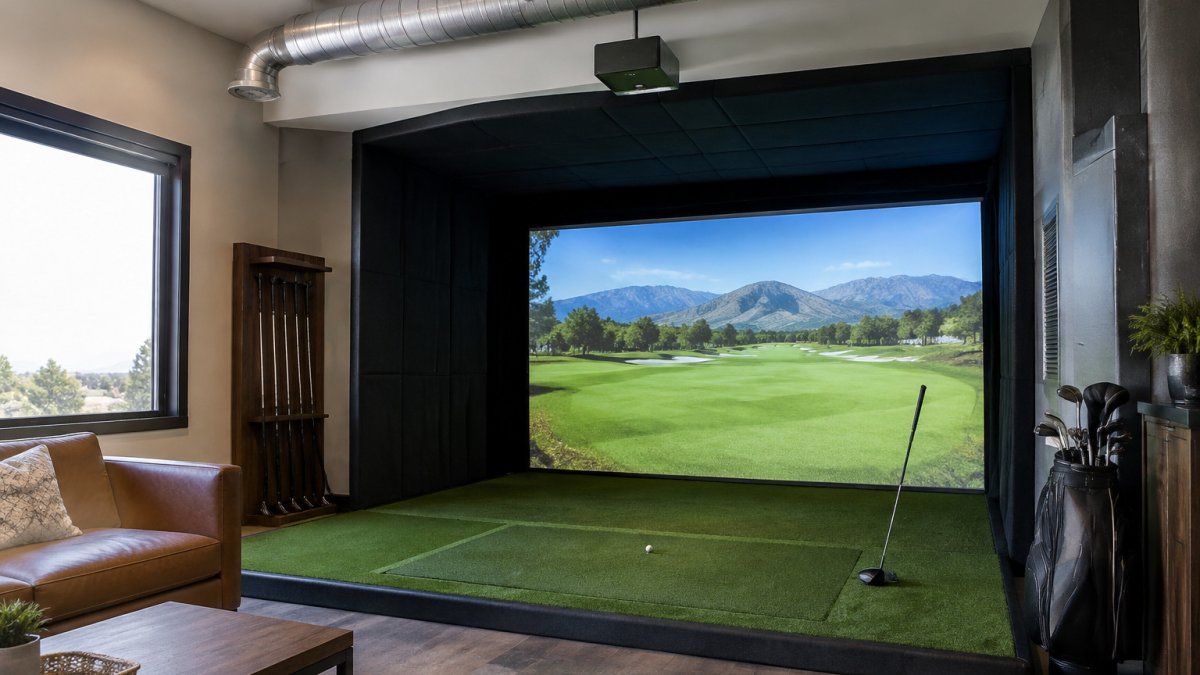
A custom golf simulator is a permanently installed, tailor-fitted practice and play space built around your room's exact dimensions, not a portable net-and-mat kit. Whether it's worth it comes down to one thing: how often you'll actually use it. At Rocket Simulators, we build these bays for homeowners who want a real practice environment at home, and the honest answer depends on your space and your habits.
Below, we break down what drives the price, how a custom build differs from a DIY setup, and where the break-even point sits for a typical golfer.
Custom Golf Simulator Cost: What Drives the Price
A custom golf simulator costs more than a kit because you're paying for design, materials, and labor, not just components. Four factors drive most of the price:
Room dimensions and ceiling height. Tight spaces need custom framing and shorter-throw projector placement.
Enclosure materials. Aluminum and wood construction costs more than a bolt-together net but lasts far longer.
Launch monitor and software. The tracking technology and simulation software are often the largest single line item.
Installation. On-site measurement, framing, screen mounting, and calibration add labor a DIY kit doesn't include.
We don't publish fixed pricing because every room is different. For a full cost breakdown, see our guide to home golf simulator setup cost.
DIY Golf Simulator vs Custom Build: Where the Money Goes
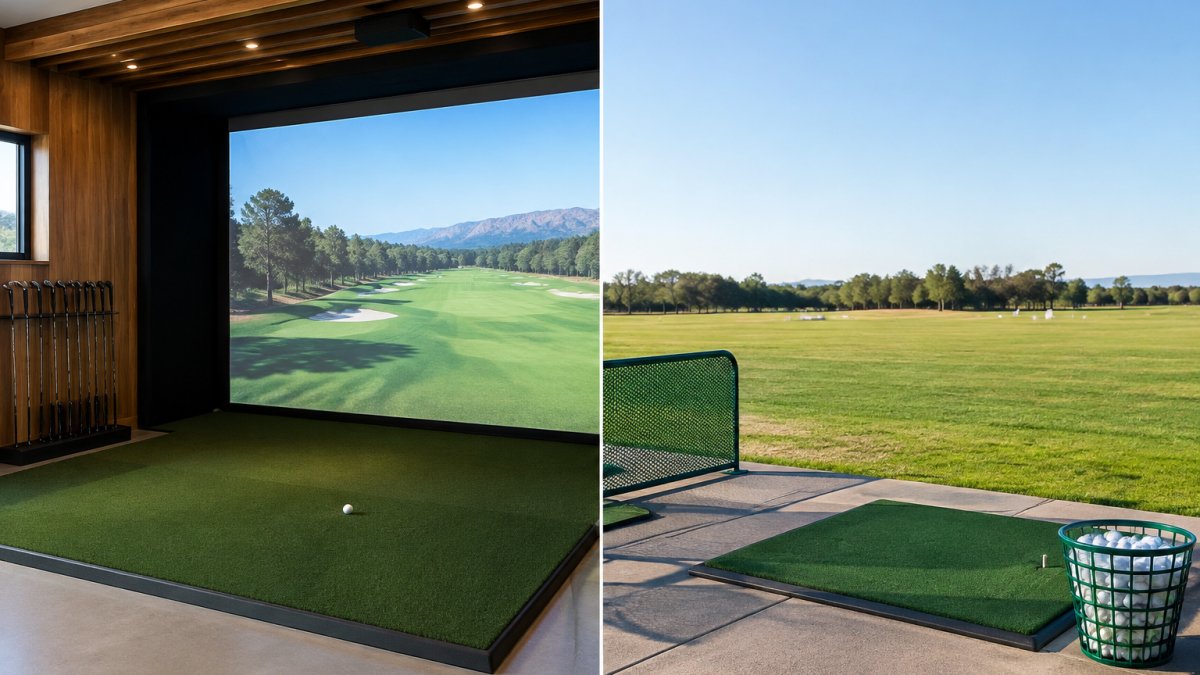
A DIY golf simulator saves money on labor and design, but you take on the measuring, framing, and calibration yourself. A custom build front-loads that cost into a finished, fitted room.
Factor | DIY Build | Custom Build |
Design and measurement | You handle it | Included on-site |
Enclosure | Kit or net | Fitted aluminum and wood |
Installation | Self-installed | Professional install |
Fit to room | Approximate | Exact |
Ongoing adjustments | Your responsibility | Handled at install |
A custom build competes on fit and finish, not on being the cheapest option.
Golf Simulator Installation: What a Professional Build Involves
Professional golf simulator installation covers on-site measurement, framing, screen and enclosure mounting, projector alignment, launch monitor calibration, and a test session before handover. The goal is a bay that fits your room exactly and performs correctly from day one.

A typical build moves through these stages:
On-site consultation. We measure ceiling height, width, and depth, and check for obstructions.
Design and material selection. Enclosure size and materials are matched to the space.
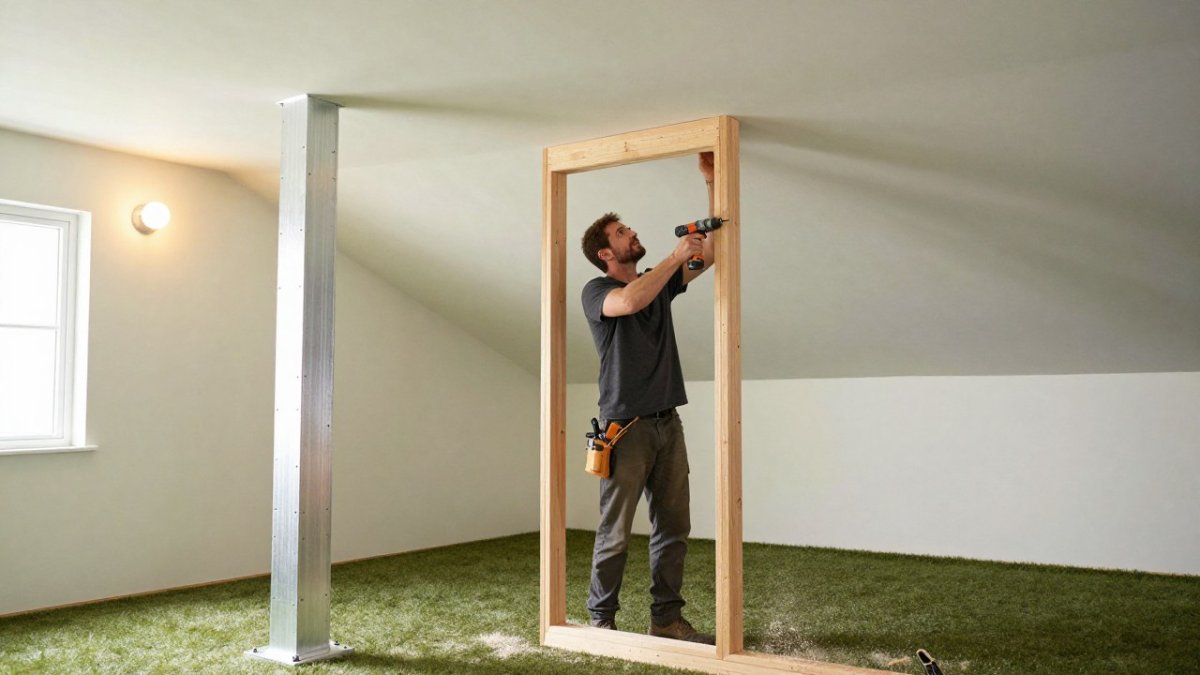
Framing and enclosure. Aluminum and wood framing goes up, then the impact screen.
Projector and launch monitor setup. Alignment and calibration for accurate ball and club data.
Test and handover. A live session confirms everything reads correctly.
For a deeper look at each stage, read our professional installation guide.
Is a Home Golf Simulator Worth It for Your Game and Your Space?
A home golf simulator is worth it if you'll practice often enough to offset the cost and your room meets the height and space requirements. Most golfers underestimate the ceiling question, and it's the first thing to check.
You need enough clearance to swing every club in your bag without hitting the ceiling or framing. If your bonus room tops out around nine feet, a custom design can often work, but it has to be measured, not guessed. Our guide to minimum ceiling height for home golf walks through the numbers before you commit.
Beyond space, ask yourself:
Will you use it weekly, or will it sit idle?
Do you want year-round practice that ignores weather?
Is it for serious swing work, family entertainment, or both?
If the answer is regular use, the value case gets strong fast.
Break-Even Math: When Usage Turns Cost into Value
The break-even point is the number of practice sessions it takes for a simulator to cost less than paying for the equivalent range time, simulator-venue rentals, and rounds.
Start by assembling your all-in cost. Total the enclosure, launch monitor, projector, hitting mat, installation labor, and any software subscription for year one. Then list your realistic alternatives and their current local prices, such as range buckets, simulator-venue hours, and green fees. Divide your all-in cost by your blended per-session alternative spend to estimate your break-even point. Pricing depends on quantity, dates, and your specific space; contact Rocket Simulators or visit our website for current prices or a quote.
The more you play and practice, the lower your effective cost per session becomes. A simulator you use weekly for years is a different purchase than one you touch a few times a season.
Total Cost of Ownership and Resale Value Over Time
A custom simulator is a multi-year ownership decision, so separate the one-time build from the running costs and the residual value.
One-time costs. Enclosure and framing, impact screen, hitting mat, projector, launch monitor, installation labor, and any room prep such as electrical or flooring. These are fixed at handover.
Recurring costs. Software subscriptions are the most predictable line, many launch-monitor ecosystems charge annual or monthly fees for course libraries and practice modes. Replacement impact screens and hitting mats wear out with use and are the two consumables to budget for. Calibration service, projector lamp or laser replacement, and occasional sensor or cable fixes round out the running total.
Upgradeability. Plan the build so the launch monitor, projector, and software can be swapped without rebuilding the room. A modular layout lets you move from an entry tracking unit to a higher-fidelity one, or upgrade the projector, without touching the enclosure. That protects the investment as technology changes.
Resale and obsolescence. A fitted enclosure built from aluminum and wood is designed for durability, and its components are the ones most likely to retain value over time. When you plan the build, leave room to swap the projector or tracking unit later.
Household and property trade-offs. A custom bay usually claims a garage or bonus room, so factor in displaced parking or storage, installation disruption, noise, and shared use. These practical costs rarely appear in equipment-price comparisons but they affect whether the room stays a simulator or becomes storage again.
Run the three-to-five-year total, not just the sticker price.
Planning Your Custom Simulator Build with Rocket Simulators
If your room meets the space requirements and you'll practice regularly, a custom build is the version of a home golf simulator that pays you back over time. The planning step is where most projects succeed or stall, so start with an on-site measurement and a clear picture of your space.
At Rocket Simulators, we handle the full process, from on-site consultation and space measurement to final installation. Our bays use ProTee technology, DelaTurf hitting mats for a true fairway feel, and crease-free screens for a clean visual experience, all built with durable aluminum and wood. You can explore the technology and materials behind each bay, then contact our team to start your build.
A simulator only earns its keep when it fits your room and your routine. If you're ready to stop guessing about ceiling height, screen placement, and calibration, get a quote from Rocket Simulators and turn your space into a bay built to fit it exactly.
Frequently Asked Questions
How much does a custom golf simulator cost?
A custom golf simulator cost depends on enclosure size, launch monitor, projector, software, and installation. Packages with professional-grade components can run several thousand dollars or more, while DIY kits start lower. Because every room is different, the only accurate figure comes from an on-site consultation and quote. Ask for a line-item breakdown covering enclosure, technology, and labor so you can compare options fairly.
Is a custom golf simulator better than a DIY setup?
A DIY golf simulator can save money if you have the time and skills to assemble an enclosure, mount a projector, and calibrate a launch monitor. A custom build handles room-fit planning, ceiling height checks, and professional installation, which reduces the risk of a setup that feels cramped or delivers inaccurate data. For homeowners who want a finished, durable space without trial and error, a custom build is usually the better fit.
How often do you need to use a home golf simulator for it to be worth it?
The break-even point depends on your upfront cost and what you would otherwise spend on range balls and green fees. Track your current monthly golf spending, then divide your simulator cost by that figure to estimate how many months of practice it takes to break even. Golfers who practice several times a week typically reach that point far sooner than casual players who visit a simulator venue occasionally.
What space and ceiling height do you need for a home golf simulator?
Most home setups need a room or garage bay roughly 10 feet wide, 12 to 15 feet deep, and at least 9 to 10 feet of ceiling height for a full swing with a driver. A 9-foot ceiling can work for shorter clubs or taller players with adjustments, which is why on-site measurement matters. A professional installation confirms clearance before any equipment is ordered.
Comments