

Are Golf Simulator Hitting Mats Durable Enough to Last?

Last Updated: October 28, 2026
Quick Summary
A durable golf simulator hitting mat needs dense turf fibers, a firm foam core, and a stable base that resists movement on smooth floors. Replaceable hitting strips extend a mat's life, since only the worn strike zone needs swapping.
Ask sellers for turf fiber density and core thickness before buying any hitting mat.
Check whether the hitting strip is replaceable and what a replacement costs.
The SIGPRO Softy strip replacement cost was reported at roughly $250, unverified.
Brush the turf weekly and rotate the strip or stance to spread wear.
Store the mat flat and dry, since rolling or folding can damage the foam core.
Table of Contents
Golf simulator hitting mats take more punishment than most home gym equipment, which is why durability should be the first thing you check. At Rocket Simulators, we build custom bays for homeowners across Central Florida. A hitting mat is a dense, turf-covered surface that absorbs the club strike and lets the golfer swing repeatedly without damaging the floor beneath. This guide explains what a durable hitting mat needs to deliver, compares the options most builders consider, and shows how to make a mat last longer.
What a Durable Golf Simulator Hitting Mat Needs to Deliver
A durable golf simulator hitting mat has to survive thousands of strikes while still feeling consistent. Most failures start in the hitting area, where the club meets the surface on every swing. Build quality decides how long that area holds up.
Turf Construction, Foam Core, and Thickness
The turf fibers and the core beneath them determine most of a mat's lifespan. Dense nylon turf resists matting and flattening better than loose, thin fibers. A foam core absorbs impact, but the density of that foam matters as much as its thickness. Thicker mats generally distribute force better, though thickness alone does not guarantee durability. Ask any seller for the fiber density and core specification before you buy, and compare them directly rather than relying on the product name.
Hitting Area Dimensions and Stance Space
The hitting area is the section that takes the most wear, so its size affects how quickly it degrades. A larger hitting area lets you rotate the mat or move your stance, which spreads wear across more surface. Confirm that the mat leaves room for a full stance and follow-through in your bay. A mat that is too small forces every swing onto the same spot and shortens its useful life.
Comparing the Top Golf Simulator Hitting Mat Options
Several brands recur in buyer guides, and each makes different trade-offs between price, replaceability, and durability. The right choice depends on how often you hit, how heavy your strike pattern is, and how much you want to spend over the life of the bay, not just at checkout. Below is a comparison built around the mechanisms that actually drive wear: turf fiber type, core density, strip replaceability, and base stability.

SIGPRO Softy: Overall Pick and Replacement Costs
One reviewer names the SIGPRO Softy as the overall top golf hitting mat, and it is designed as a hitting strip for home simulator setups rather than a full-floor mat. The practical advantage is that the wear zone is isolated: when the turf mats down, you replace the strip instead of the whole surface. A search result reports a replacement cost of roughly $250 when the strip wears out, which gives buyers a reference point for long-term upkeep. Confirm the current price with the seller, because the supplied sources did not verify it.
What to check before buying: ask for the turf fiber density (denier and stitch rate), the foam core thickness and density, and whether the strip is held in place by a tray, velcro, or friction. A strip that shifts under a fat shot will wear unevenly and can throw off footing.
Best for: home simulator owners who want a replaceable hitting strip and a clear sense of replacement cost.
Carl's HotShot Golf Mats: Replaceable Strip and Non-Slip Base
Carl's HotShot pairs a replaceable hitting strip with a non-slip base. The replaceable strip means the hitting area can be changed without replacing the entire mat, which is a practical advantage for a surface that wears quickly. The non-slip base matters in an indoor bay, where a shifting mat can throw off your footing and, over time, cause the turf to bunch at the edges, a common failure mode on smooth concrete or epoxy floors.
What to check before buying: confirm the base material (rubber, EVA foam, or PVC), the strip retention method, and whether the mat ships with edge ramps. Edge ramps reduce trip hazards and keep the mat from curling at the perimeter. Current pricing and exact dimensions were not verified in the sources we reviewed.
Best for: builders who want a mat with a swappable hitting area and a stable base.
SwingTurf and Fiberbuilt: Budget and Durability Trade-offs
SwingTurf is positioned as a value option, with reviews placing it under $500 for simulator builders on a tighter budget. Fiberbuilt is described as built to last and is praised for injury prevention. The choice between them is a trade-off: SwingTurf keeps the upfront cost lower, while Fiberbuilt is the stronger pick if durability and joint protection rank above price.
The mechanism behind that trade-off is worth understanding. Budget mats often use a thinner turf face over a lower-density foam core; they feel fine when new but compress faster in the hitting zone, which changes strike feel and can increase shock transfer to the wrists and elbows over long sessions. Premium mats typically use a denser core and a fiber that resists matting, which costs more upfront but spreads the cost per strike over a longer service life. Neither source verified detailed construction specifications, so ask for them before you commit.
Best for: SwingTurf for budget-conscious builds; Fiberbuilt for owners who prioritize durability.
Pro Tip Before you buy any mat, ask the seller three questions: What is the turf fiber density? What is the core material and thickness? Is the hitting strip replaceable, and what does a replacement cost? Sellers who can answer all three are usually the ones whose mats hold up.
How to Compare Mats Side by Side
When you line up options, score each one on the same five criteria so the decision is not driven by marketing copy:
Hitting-zone replaceability, can you swap only the worn strip, or must you replace the whole mat?
Core density and thickness, denser foam resists compression; thickness alone is not a proxy for durability.
Base stability, rubber or high-density EVA bases resist movement on smooth floors better than thin foam.
Stance area, a mat that lets you rotate your stance spreads wear across more surface.
Replacement cost and availability, a $250 strip every few years is a different ownership cost than a $900 full mat.
The mat options covered in this comparison differ mainly in whether the hitting strip can be replaced and what it costs over time.
Option | Best for | Key difference |
SIGPRO Softy | Replaceable hitting strip | Strip swapped instead of whole mat |
Carl's HotShot | Swappable area and stable base | Replaceable strip plus non-slip base |
SwingTurf | Budget-conscious builds | Under $500 for simulator builders |
Fiberbuilt | Durability and joint protection | Praised for injury prevention |
Golf Simulator Hitting Strip Review: Replaceable Strips vs. Full Mats
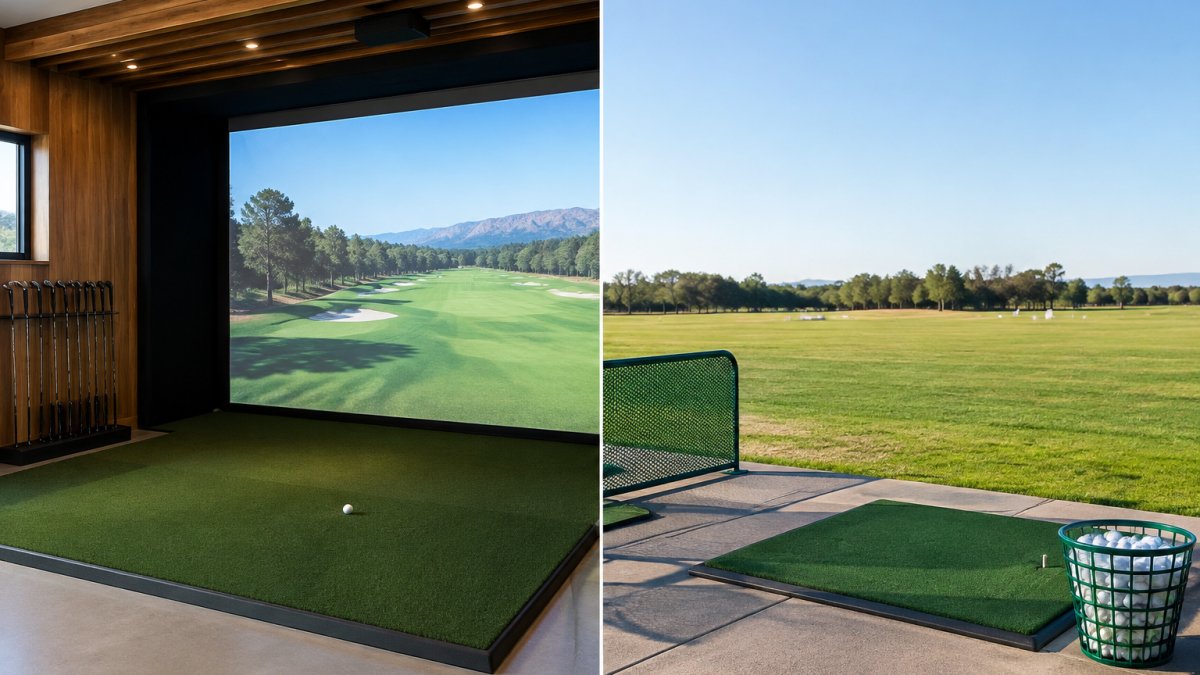
A hitting strip is a narrow section that takes the club strike, while a full mat covers the entire bay floor.
Realistic Feel, Joint Comfort, and Forgiveness on Fat Shots
Durability and feel are linked. A mat that compresses or flattens over time will change how the club strikes the surface, and that affects both the sound and the feel of each swing. Look for turf that stays firm and a core that absorbs impact without feeling dead. Forgiveness on fat shots is also worth testing before you buy. A mat that holds up well under heavy, mis-hit strikes is generally more durable overall.
Lifespan, Wear Signs, and Golf Mat Maintenance
Most durability claims in mat marketing are vague because lifespan depends heavily on how the mat is used, not just how it is built. A mat that sees 50 swings a week on a centered stance will outlast an identical mat that sees 500 swings a week with the same strike point. The useful question is not "how long does this mat last?" but "what wears first, and how do I slow it down?"
The Failure Modes to Watch For
Fiber matting in the hitting zone. The turf fibers flatten and lose their upright loft where the club repeatedly contacts the surface. This is the earliest and most common sign of wear.
Compression of the foam core. The core under the hitting zone compresses and loses rebound, which changes strike feel and reduces impact absorption.
Bald patches and fiber loss. Fibers break or pull out in the highest-wear spot, exposing the backing.
Base cracking or curling. Foam or rubber bases can crack at the edges or curl at the perimeter, especially on smooth floors or in humid spaces.
Mat movement. A mat that shifts under a fat shot accelerates edge wear and can become a footing hazard.
What Drives Lifespan Up or Down
Strike volume. A daily-practice bay will wear a hitting zone several times faster than a weekend setup. If you hit more than a few hundred balls a week, a replaceable-strip design is almost always the more economical choice.
Strike concentration. Every swing on the same spot concentrates wear. Rotating your stance, or choosing a mat with a larger hitting area, spreads the load.
Environment. Heat and humidity break down foam and turf backing over time. A garage or spare room with poor moisture control will shorten mat life compared with a climate-controlled space.
A Practical Maintenance Protocol
Brush the turf weekly. A stiff nylon brush lifts matted fibers and redistributes the turf, which keeps the hitting zone more uniform.
Keep the surface clean. Dirt, sand, and debris work into the fibers and act like abrasives under the club. Vacuum or sweep regularly.
Rotate the strip or stance. If your mat allows it, rotate the hitting strip 180 degrees periodically, or shift your stance a few inches, so wear is not concentrated on one spot.
Check the base and edges. Look for curling, cracking, or movement at the perimeter. Edge ramps and a non-slip base reduce both.
Control moisture. Store the mat flat and dry, and keep it out of direct sun. In humid spaces, a dehumidifier or good ventilation will extend the life of the foam core and backing.
Replace the strip, not the mat. When the hitting zone mats down or goes bald, replace the strip if the design allows it. This is the single biggest cost saver over the life of a bay.
Watch Out Do not store a mat rolled up or folded for long periods. Foam cores can take a set and lose rebound, and turf backing can crease. Store flat and dry.
What This Means for Buyers
When you compare options, ask how the hitting zone is replaced, what a replacement costs, and whether the base is designed to stay put. Those three answers tell you more about long-term ownership cost than any durability claim on the packaging.
Choosing a Hitting Mat for Your Simulator Bay With Rocket Simulators
Choosing a mat is one part of building a bay that performs well for years. At Rocket Simulators, we design custom simulator bays around each client's space. Our bays are built with durable aluminum and wood construction and include DelaTurf hitting mats. If you are weighing a mat choice for your Central Florida home, request a custom design and installed quote.
Frequently Asked Questions
What is the most durable golf simulator hitting mat?
Durability depends on turf density, foam core thickness, and how often the mat takes impact in one spot.
How long should a golf simulator hitting mat last?
Lifespan varies with usage volume, mat construction, and whether the hitting area is replaceable.
Do golf hitting mats cause joint pain?
If you have a history of tendonitis or joint pain, test a mat for a few sessions and consult a medical professional before a heavy practice routine.
Are hitting strips more durable than full golf mats?
Compare strip replacement costs against the price of a full mat before deciding.
Comments