

7 Ways to Soundproof a Home Golf Simulator

Last Updated: November 12, 2026
Quick Summary
To soundproof golf simulator noise, first find your dominant noise path, then fix the source: a heavier screen with slight slack, a dense foam underlayment beneath the mat, and a softer ball. Seal air gaps and add absorption next, and save structural isolation for last.
Airborne noise, impact noise and room echo each need a different fix.
Seal gaps and soften surfaces first, then absorb and damp, then isolate.
A padded screen attachment point breaks the vibration path into the frame.
A dense foam underlayment decouples the club strike from a concrete slab.
Thin foam and egg cartons kill echo but do almost nothing for transmission.
Ready to build a quieter home bay?
Rocket Simulators designs and installs custom at-home golf simulator bays tailored to your space.
Table of Contents
Why Your Golf Simulator Is So Loud (and What You're Actually Hearing)
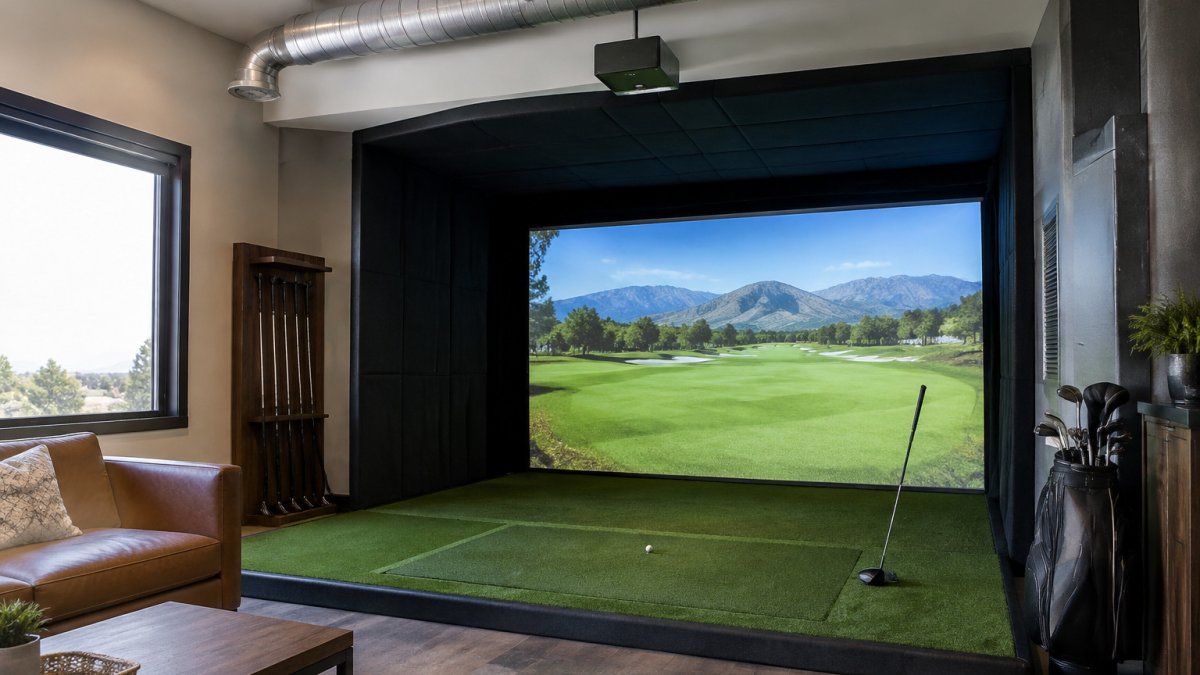
The first time you hit a driver indoors in a soundproof golf simulator, the sound surprises you. It's not one noise. It's a sharp crack, a low thud, and a ringing echo that hangs in the room. Learning how to soundproof a home golf simulator starts with knowing which of those sounds you actually need to stop. This guide breaks down the fixes by noise type, budget, and room, so you spend money on the right materials instead of guessing.
Here's the part most guides get wrong: they treat all noise as one problem. It isn't. You're hearing three different things, and each one needs a different fix.
Airborne Noise vs. Impact Noise vs. Room Echo
Airborne noise is sound traveling through the air and escaping through gaps. The crack of the club and the pop of the ball are airborne.
Impact noise is vibration. The ball slams the screen, the club hits the mat, and that energy travels through studs, joists, and concrete into other rooms.
Room echo is sound bouncing off hard surfaces inside the room. Bare drywall, concrete floors, and glass make a simulator bay feel loud even when little sound escapes.
Miss the difference and you'll buy foam to fix a vibration problem. It won't work.
Find the Dominant Noise Path Before You Buy Anything
Before you spend a dollar, run this simple test. Have someone hit balls while you stand in the rooms that matter: the bedroom above, the hallway beside, the patio outside.
Listen at the wall: crack or thump?
Listen upstairs: low rumble or sharp snap?
Stand inside the bay: does it ring or feel dead?
Check gaps: light under doors, outlets, attic access
Write down which sound is loudest. That's your dominant path, and it gets your first dollars. A common mistake is treating the whole room at once and spreading a small budget too thin.
How to Soundproof a Home Golf Simulator DIY on a Tiered Budget
A DIY soundproofing plan works best in three tiers, and you should finish tier one before starting tier two. Here's one way to sequence it.
Tier | What You Do | Rough Materials | Best For |
1. Seal and soften | Weatherstrip doors, seal gaps, add rugs and soft panels | Sealant, weatherstrip, rugs | Tight budget, echo problems |
2. Absorb and damp | Acoustic panels, mass loaded vinyl, mat underlayment | Panels, MLV, underlay | Most home bays |
3. Isolate | Double drywall, resilient channels, decoupled framing | Drywall, clips, insulation | Bedrooms above, close neighbors |
Start with sealing. Air gaps leak more sound than most people expect, and fixing them is cheap. Then add absorption to kill the ring. Save structural work for last, because it costs the most and is hardest to undo.
Taming the Ball-Strike: Impact Screen and Hitting Mat Fixes
The ball strike is your loudest single event, and it is the one noise source unique to a simulator. Generic room acoustics advice doesn't address it. Fixing the screen, the mat, and the ball cuts the peak noise at the source before it reaches the walls.
Why the screen snaps
A tight, thin screen behaves like a drumhead. The ball's energy transfers into the fabric, the fabric transfers it into the frame, and the frame transfers it into the studs. The result is a sharp crack plus a low thump. A heavier, multi-layer screen with a small amount of slack turns that energy into a softer, shorter sound because the fabric stretches and dissipates some of the hit instead of passing it straight through.
Three questions before you buy a screen:
How heavy is it per square yard? Heavier weaves generally absorb more impact energy than light, taut ones.
Does it mount tight or with slack? Slight slack and a padded border reduce the crack.
Is the frame padded where the screen attaches? A padded attachment point breaks the vibration path into the frame.
Why the mat thumps
The mat is the second half of the impact problem. A thin mat over a concrete slab sends the club's energy straight into the floor, and the floor carries it into the room below. A dense foam underlayment beneath the mat decouples the strike from the slab and turns a sharp thump into a duller, quieter hit. This is one of the highest-value fixes in the whole build because it addresses structure-borne noise at the source.
Ball choice matters more than people think
A hard, high-compression ball sounds louder and transfers more energy into the screen than a softer ball. If you practice with the same ball you play, you're accepting the louder strike. Many home users keep a softer practice ball for high-volume sessions and switch to their gamers for short, focused work. It's a trade-off between realism and quiet, and it's worth testing before you spend on construction.
Combine source fixes with path fixes
Source fixes (screen, mat, ball) reduce the energy entering the structure. Path fixes (sealing, mass, decoupling) stop what's left from escaping. Do the source fixes first because they're cheaper and they make every downstream treatment work better. If you're still choosing enclosure materials, our guide to the best custom golf simulator enclosure materials covers screen weight and fabric options in detail.
Watch out: a taut, lightweight screen on an unpadded frame will stay loud no matter how much absorption you add to the walls. Fix the mounting before you buy panels.
Mass Loaded Vinyl for Golf Simulator Room Walls and Ceiling
Mass loaded vinyl, or MLV, is a heavy flexible sheet that adds mass to a wall or ceiling to block airborne sound. It works best hung loose, not glued flat, and it needs sealed seams to be effective.
Use it on shared walls and ceilings, especially over a bedroom. Layer it behind drywall or as a hanging barrier in a garage. It won't fix impact vibration on its own, so it is usually paired with a dense mat underlayment.
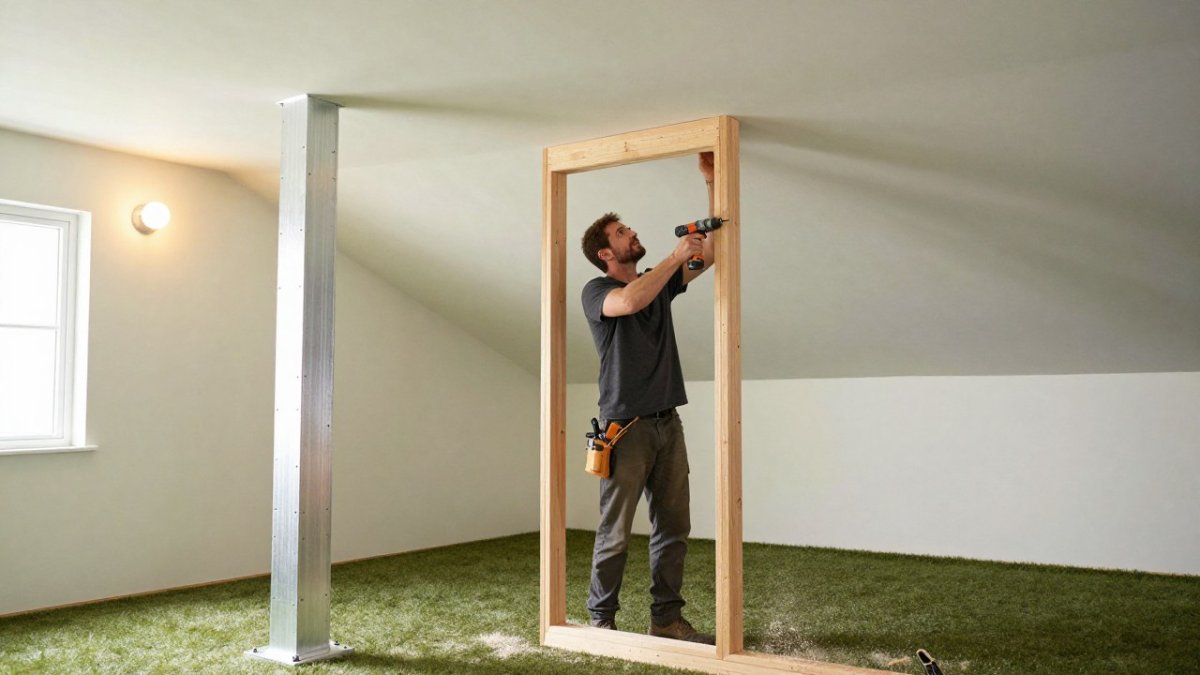
If you're building new walls to hold that mass, our guide to building a golf simulator frame walks through the structure step by step.
Watch out: MLV is heavy and awkward overhead. Get a second person and proper anchors, or the ceiling install becomes a safety problem.
How to Soundproof a Garage for a Golf Simulator
Garages are the most common home bay, and they're also the leakiest. The garage door, the gaps around it, and the bare concrete floor all let sound escape fast.

Seal the garage door of your soundproof golf simulator with weatherstrip and a threshold seal. Hang moving blankets or acoustic panels on the shared wall. Add a thick rug or turf over the concrete to kill echo. If a bedroom sits above the garage, treat the ceiling with MLV and consider resilient channels.
Ceiling height matters before you commit. Our minimum ceiling height setup guide helps you confirm your swing fits before you invest in treatment.
Absorption, Sealing, and Soft Surfaces: Reducing Echo and Leaks
Echo makes a small room feel like a shouting match. Soft surfaces fix it. Acoustic panels, foam tiles, carpets, and furniture all soak up sound that would otherwise bounce.
Hang panels at ball height on the side walls
Add a rug or turf over hard floors
Put a soft sofa or storage bench in the corner
Seal outlets, attic hatches, and door frames
Weatherstrip every door and window
Air gaps are the sneaky part. A gap the width of a pencil leaks real sound. Walk the room with a caulk gun and seal what you find.
What Realistic Results Look Like (and What to Skip)
Honest expectations matter here. Treatment reduces noise; it rarely makes a bay silent. Sealing and soft surfaces make the biggest difference for the least money. Structural isolation helps most for bedrooms and close neighbors, but it costs the most.
Skip these common traps:
Thin foam only, which kills echo but not transmission
Egg cartons, which do almost nothing
Treating the whole room before finding the loudest path
Measure before and after with a phone sound meter app. You'll see which fixes actually worked.
Planning Your Build With Rocket Simulators
At Rocket Simulators, we design and install custom bays built around your room, not the other way around. Our team measures your space on site and recommends equipment that fits your ceiling height and layout. We build enclosures from North American aluminum and wood, pair them with ProTee technology, and finish with a crease-free screen.
If you'd rather have the work done right the first time, our professional installation guide explains what a full build involves. When you're ready to plan, contact Rocket Simulators for a custom design in the Greater Orlando area.
Getting a quiet, accurate bay takes the right sequence: seal, absorb, isolate, and fix the ball strike first. Rocket Simulators handles the whole build, from on-site measurement to final install, using durable aluminum and wood enclosures, ProTee projectors, and DelaTurf mats. Get started with Rocket Simulators and build a bay your whole household can enjoy without the noise complaints.
Frequently Asked Questions
Can you actually soundproof a golf simulator in a normal home?
You can substantially reduce noise, but full isolation is difficult in a typical residential room. The practical goal is to cut the noise your neighbors and family hear, not to make it silent. Sealing air gaps, adding mass to shared walls, decoupling surfaces, and absorbing echo inside the bay together deliver the biggest gains. Mass and decoupling planned from the start, rather than layered on afterward, generally give better results than a retrofit.
Do acoustic panels reduce golf simulator noise?
Acoustic panels control room echo and reverberation, which makes the bay sound tighter and reduces how much noise reflects back into the house. They do not block airborne sound transmission through walls, and they do nothing for impact noise from the ball striking the screen. Treat panels as one layer of a soundproof golf simulator plan: use them for echo, then add mass and sealing for transmission. Panels alone will disappoint anyone expecting them to stop noise reaching a bedroom.
Does mass loaded vinyl help soundproof a golf simulator room?
Mass loaded vinyl adds density to a wall, ceiling, or floor assembly, which helps block airborne noise. It works best when installed as a continuous layer with seams overlapped and edges sealed, ideally decoupled from the existing drywall. It does not stop impact noise on its own. For a golf simulator, pair MLV with resilient channels or a staggered stud wall and seal every perimeter gap. Expect a noticeable reduction in transmitted sound, not silence.
What is the quietest golf impact screen option?
Heavier, tightly tensioned screens absorb more energy and produce a duller thud than thin, loosely hung screens that flap and snap. Multi-layer polyester screens with a padded backing and a tight, even tension across the frame are generally quieter. Mounting the screen with bungees or a tension system rather than loose grommets reduces rattle. Pairing a quiet screen with a thick hitting mat and a decoupled frame isolates the impact noise further. Ask your installer to demonstrate screen tension and backing before you commit.
Comments